 blog
Zillow vs Realtor.com for Investors: Which Portal Wins
Last Updated: November 20, 2026
Quick Summary
In the zillow vs realtor.com comparison for investors, Zillow wins on audience reach with roughly 239 million monthly users, about 3.5 times Realtor.com's traffic, while Realtor.com reportedly carries around 33% more listings. Neither portal is a system of record, so verify every listing against the MLS and public record before underwriting a deal.
- Zillow averaged 239 million monthly users in Q2 2026, about 3.5 times Realtor.com's traffic.
- No independent study shows Zillow leads outperform Realtor.com leads, per Mergro's 2026 analysis.
- The May 5, 2026 partnership made Preview pre-market listings a shared feature, not a differentiator.
- Track cost per lead, contact rate, appointment rate and close rate for 60 to 90 days before scaling spend.
- The Jacques Team pulls listings every 15 minutes from the official Realtor database for fresher status changes.
Table of Contents
- Zillow vs Realtor.com for Investors: The Core Trade-Off
- Head-to-Head: Listings, Leads and Costs at a Glance
- Real Estate Listing Data Accuracy and Update Speed
- Zillow Zestimate Accuracy for Investors
- Lead Generation, Lead Quality and What You Pay
- How to Find Investment Properties Online Without Wasting Weeks
- Best Real Estate Websites for Investors by Strategy
- Set Up Your First Investor Search With The Jacques Team
- Frequently Asked Questions
Zillow vs Realtor.com for Investors: The Core Trade-Off
Zillow Group averaged 239 million monthly users in the second quarter of 2026, roughly 3.5 times Realtor.com's monthly unique visitors, according to Real Estate Skills' platform comparison. That traffic gap shapes nearly every conversation about zillow vs realtor.com for investors, but audience size and deal quality are not the same thing. This guide from The Jacques Team breaks down where each portal actually helps an investor, where it misleads, and how to build a search workflow that doesn't depend on either one.
Here's the uncomfortable truth most comparisons skip: no independent study establishes that Zillow leads outperform Realtor.com leads, a point Mergro's 2026 lead analysis makes explicitly. Traffic is measurable. Lead quality is not, at least not publicly.
How These Two Portals Differ Under the Hood
Both platforms are consumer-first listing portals, and that framing matters for investors. Zillow aggregates listings, syndicated feeds, and its own valuation estimates into a single search experience built for broad reach. Realtor.com leans on its direct MLS relationships and, per Remarkable Land's listing comparison, carries roughly 33% more listings, though that figure lacks a published methodology and deserves caution.
The practical difference: Zillow gives you more eyeballs on a property. Realtor.com may give you more inventory to eyeball. Neither replaces a live MLS feed.
Head-to-Head: Listings, Leads and Costs at a Glance
The table below summarizes how the two portals stack up on the factors investors weigh most.
| Factor | Zillow | Realtor.com |
|---|---|---|
| Audience reach | ~239M monthly users (Q2 2026) | Roughly one-third of Zillow's |
| Listing coverage | Broad, includes syndicated feeds | Reported ~33% more listings |
| Valuation tool | Zestimate | RealEstimate |
| Rental data | Rental revenue hit $220M in Q3 2026 | Limited rental focus |
| Pre-market access | Preview listings, expanded May 2026 | Preview listings, shared with Zillow |
| Best for | Reach and rental research | Broader inventory scans |
The May 5, 2026 partnership extending Preview pre-market listings across both platforms, announced via Zillow Group Investor Relations, narrows one historical gap. Pre-market transparency is now a shared feature rather than a differentiator.
Real Estate Listing Data Accuracy and Update Speed
Real estate listing data accuracy depends on how close a portal sits to the source MLS and how often its feed refreshes. Both Zillow and Realtor.com receive feeds, but refresh intervals vary by market and by listing type, and neither platform guarantees real-time status. A listing marked active on a portal can be pending or sold in the MLS hours earlier.
Why the Lag Exists
Portals don't query the MLS live. They ingest a feed, typically an IDX or syndicated data feed, on a schedule set by the MLS or the feed provider. Some markets push updates every few minutes; others batch every several hours. Realtor.com's direct MLS relationships are one factor that can affect how broad its inventory is and how quickly status changes appear.
A Verification Checklist for Investment Decisions
Before you underwrite a deal you found on either portal, verify each of the following against a primary source, the MLS via your agent, the county recorder or assessor, and the listing agent directly:
- Listing status: Confirm active, pending, or contingent in the MLS, not just on the portal. Ask the listing agent for the status date.
- Property facts: Square footage, bed/bath count, lot size, and year built should match the county assessor record. Discrepancies between portal data and public record are common and can change your rehab scope.
- Taxes: Pull the actual tax bill from the county treasurer or assessor, since portal tax figures may not reflect the latest assessment.
- Rents: Portal rental estimates are modeled, not observed. Confirm with current rent listings for comparable units and, where possible, the actual lease on the property if it is tenant-occupied.
- Comparable sales: Pull closed comps from the MLS with sale dates and concessions. Portal 'recently sold' data can omit seller concessions, which distort the effective price.
Watch out: a portal listing that shows 'active' with a recent price cut can still be under contract, price reductions sometimes post before status changes, so confirm status with the listing agent before you schedule a showing or make an offer.
What Each Portal Does Better on Data
For investors, the practical rule is the same on both: use the portal to generate candidates, then verify every candidate against the MLS and public record before you spend money on inspections, appraisals, or offers. When you need a quick benchmark, this guide shows how to get instant property valuations without guesswork. The portal is a discovery tool, not a system of record.
Zillow Zestimate Accuracy for Investors
The Zestimate is an automated valuation model, not an appraisal.
For a flip or a rental purchase, a Zestimate error of even a few percent can erase your margin. If you want to understand why portal estimates drift, this breakdown of why online home estimates are inaccurate explains the mechanics.
Lead Generation, Lead Quality and What You Pay
Lead generation is where the two platforms diverge most for agents and investors buying visibility, and where the published numbers are thinnest. Zillow's audience scale means more impressions, but impressions aren't leads. A Zillow News study on broker-site traffic found Zillow accounted for 12% of visits to broker sites while its share of leads ran higher, suggesting referral traffic converts reasonably well.
How the Pricing Actually Works
Both platforms sell visibility through a few common models, and the model matters more than the brand for your budget:
- Pay-per-lead and shared leads: some programs sell leads individually or share them among multiple agents, which lowers cost per lead but dilutes conversion because you're competing for the same contact.
- Display and listing promotion: both platforms sell visibility boosts for individual listings, useful for flips that need buyer traffic fast.
Because pricing is negotiated by market and by zip code, two investors in different metros can pay wildly different amounts for the same program. Ask for the zip-level cost and the historical lead volume for that zip before you sign anything.
Lead Quality: What You Can and Can't Measure
No independent study establishes that Zillow leads outperform Realtor.com leads, a point Mergro's 2026 lead analysis makes explicitly. Traffic is measurable; lead quality is not, at least not publicly. What you can measure is your own funnel: cost per lead, contact rate, appointment rate, and close rate by source. Track those four numbers for 60 to 90 days before you scale spend on either platform.
The Investor Distinction: Buyer Leads vs. Deal Flow
Most lead-generation discussion is framed around agents buying buyer and seller leads. Investors need a different lens. If you are flipping, buyer leads matter less than listing exposure, you want your flip seen by end buyers, which is a listing-promotion problem, not a lead-purchase problem.
A common pattern among investors who buy portal leads is to treat them as one channel among several and to cap spend at a level your own conversion data justifies.
Budgeting Without a Rate Card
Start with a test budget sized to your market's typical placement cost, run it for one full sales cycle, and measure cost per closed deal against your target acquisition cost. If a channel can't beat your target after a fair test, cut it and reallocate. The platforms won't tell you what a lead is worth, only your own close rate can.
How to Find Investment Properties Online Without Wasting Weeks
Learning how to find investment properties online starts with narrowing your search before you click. Most investors lose weeks to portal browsing because they screen for price and photos instead of numbers.
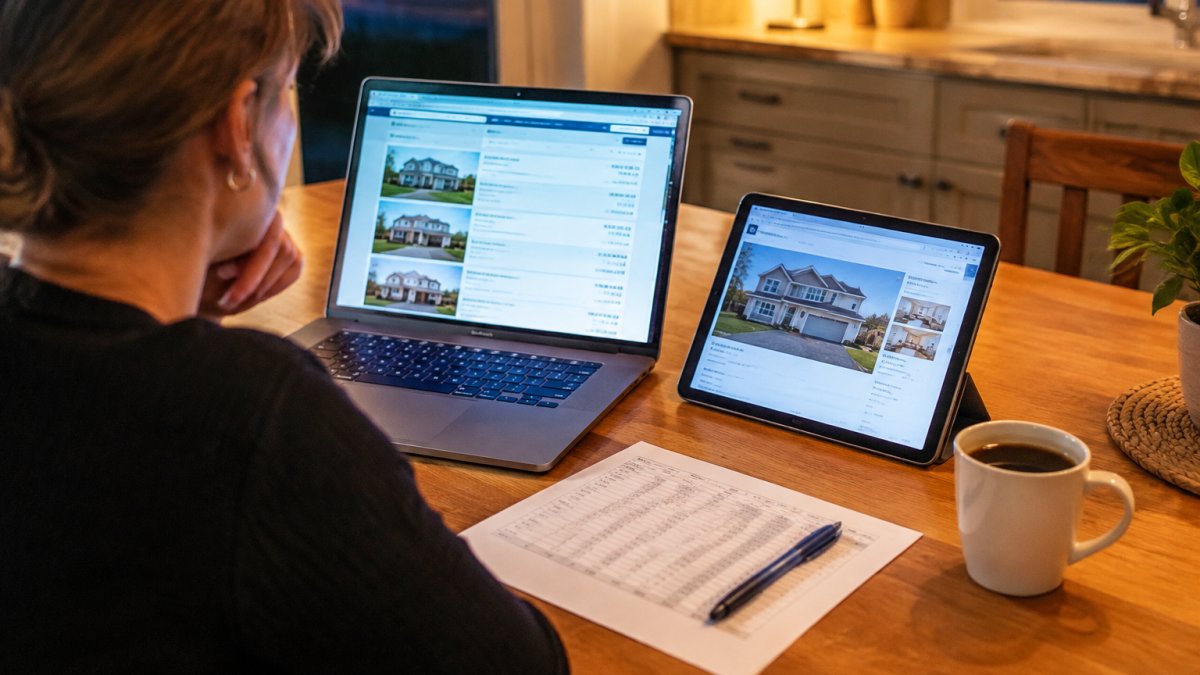
A workflow that holds up:
- Set saved searches by zip code, property type, and max price
- Turn on property alerts for new listings and price reductions
- Screen every candidate against rent estimates before scheduling a showing
- Track listing status changes daily, not weekly
- Pull comparable sales for each shortlisted property
If you want to see inventory beyond the portals, learn how to find off market homes before they hit the MLS. And when you're ready to screen geography visually, this guide to using interactive maps for home search shows how boundary drawing tightens a search fast.
Screening for Cash Flow, Cap Rate and Gross Yield
Run three numbers on every candidate before you tour it: gross yield (annual rent divided by price), cap rate (net operating income divided by price), and monthly cash flow after debt service, taxes, and insurance. If any one fails your threshold, skip the showing. This single discipline eliminates most wasted trips.
Best Real Estate Websites for Investors by Strategy
The best real estate websites for investors depend on the strategy, not the brand. Here's how we'd match them:
- Fix-and-flip: prioritize listing freshness and price-reduction alerts over raw inventory volume
- Buy-and-hold rentals: weight rental estimates and rent listings heavily; Zillow's rental data depth helps here
- Off-market and distressed: treat portals as a starting point only; foreclosure and pre-market inventory requires direct MLS access and local agent relationships
- Multi-market portfolios: favor platforms with saved searches and exportable market data over consumer-facing interfaces
Repeat buyers made up 58% of buyers in 2026, up from 50% in 2023, according to Zillow Research's Consumer Housing Trends Report. Investors are a growing share of the market, and the portals know it.
Set Up Your First Investor Search With The Jacques Team
Portal browsing gets you oriented. It doesn't get you to a closing.
The Jacques Team pulls listings every 15 minutes from the official Realtor® database, so status changes and price cuts surface faster than on syndicated feeds.
Start with a saved search in the neighborhoods you actually want, and let the alerts do the screening.
The core trade-off in zillow vs realtor.com for investors comes down to reach versus inventory, and neither portal settles the question of deal quality.
Frequently Asked Questions
Is Zillow or Realtor.com better for real estate investors?
It depends on what you need. Zillow reaches a far larger audience, which helps with exposure and speed of discovery. Realtor.com is often compared on inventory coverage, which matters when you want full listing coverage. No independent study settles which platform's leads are better, so treat audience size as reach, not proof of lead quality. Match the portal to your strategy, then verify every number against MLS data.
Can you find investment properties and foreclosures on Zillow or Realtor.com?
Both portals let you filter for foreclosures, price reductions and listing status. That said, you may be seeing the same inventory as other investors using the same platform. For distressed and off-market deals, The Jacques Team's search pulls from the official Realtor database every 15 minutes, so status changes and sold data reach your saved searches quickly.
How reliable is the Zillow Zestimate for investment decisions?
Treat the Zestimate as a starting reference, not an appraisal. Automated home value estimates can drift from reality when a property is distressed, renovated or in a thin market. For investors, the numbers that decide a deal are rent, vacancy, property taxes and repair costs, none of which an automated estimate captures. Pull comparable sales yourself and confirm the rental estimate with current rent listings before you underwrite.
How often are listings updated on these platforms?
Update frequency varies by source and market, and neither portal publishes a single guaranteed refresh interval. The Jacques Team's search pulls from the official Realtor database every 15 minutes, so new listings, price changes and sold data reach your saved searches quickly. If timing matters for your offers, set daily email alerts and confirm listing status with your agent before writing a contract, since a stale status can cost you a deal.