 How-to
Why Online Home Estimates Are Inaccurate: 2026 Guide
Last Updated: October 23, 2026
Quick Summary
Online home estimates are inaccurate because they rely on recorded data rather than seeing your actual house. Automated valuation models compare your property's recorded details against recent sales data, so they never walk your halls or check your upgrades. The number reflects the file, not the home you live in.
- Automated valuation models pull recorded facts, find nearby sales, adjust for differences, and output a number with no inspection.
- Unpermitted additions, finished basements, and converted garages are often invisible to the algorithm and can lower your estimate.
- Published accuracy figures are medians, meaning half the homes in the sample missed by more than the advertised amount.
- An appraisal is a licensed professional's opinion after an in-person inspection, while an online estimate carries no legal weight.
- Correcting your county property record is the highest-use fix, since every estimate built on a wrong record is wrong too.
Table of Contents
- How Online Home Estimates Are Generated
- The Data Gaps That Make Estimates Wrong
- How Accurate Are Online Home Value Estimates?
- Online Home Estimate vs Appraisal: What's the Difference?
- How Often Do Home Value Estimates Update?
- How to Find the Market Value of a Home
- Reading a Valuation Range and What to Do When Estimates Disagree
- Conclusion
- Frequently Asked Questions
How Online Home Estimates Are Generated
Online home estimates are inaccurate because they rely on data, not on seeing your actual house.
A homeowner sees a number on a screen and assumes it reflects the house they live in. Usually, it reflects the house the database thinks they live in.
The model pulls from public records, tax data, and prior listings. Then it runs a formula. That formula is only as good as its inputs.
What an Automated Valuation Model Actually Does
An automated valuation model (AVM) is a statistical tool that estimates market value by comparing a property to similar homes using recorded data. It runs three basic steps:
- Pull your home's recorded facts: bedrooms, bathrooms, square footage, lot size
- Find recent sales of similar homes nearby
- Adjust the sale prices for differences, then output a number
That's it. No inspection. No photos. No conversation with anyone who has been inside the property.
Fannie Mae's guidance on automated valuation models notes that AVMs are one tool among several and are not a substitute for an appraisal. That distinction matters more than most sellers realize.
The Data Gaps That Make Estimates Wrong
The data gaps are where things fall apart. Public records are often stale, incomplete, or just wrong. And the algorithm has no way to know.
Here's what commonly goes missing:
- Square footage errors. County records lag behind permitted additions and finished garages.
- Undisclosed renovations. A remodeled kitchen looks identical to a 1980s original in the data.
- Missing features. Pools, decks, ADUs, and solar arrays often never make it into the record.
A common mistake is assuming the number reflects reality. It reflects the file.
Property Records, Square Footage, and Missing Information
Property records are the foundation, and foundations crack. Many counties update records slowly, and some homeowners never pull permits for improvements. The result is a database that describes a house that no longer exists.
Square footage is the biggest offender. An unpermitted addition won't show up. A converted garage may still be listed as a garage. Either way, the model compares your home to the wrong set of comps.
How Accurate Are Online Home Value Estimates?
Online home value estimates are directionally useful and precisely unreliable.
Most providers publish accuracy claims built on error metrics.
That distinction matters because error is not evenly spread.
Accuracy also swings by market. In fast-moving conditions, recent sales data goes stale within weeks. The model keeps using it anyway.
What most guides miss is this: accuracy isn't one number. It's a range that changes with your property and your local market.
How Estimate Accuracy Varies by Property and Market
Instead of treating all estimates alike, sort your property into the bucket it belongs to and discount accordingly:
- Rural and low-transaction-volume properties. Fewer sales means fewer comps and wider error bands. If the nearest true comparable sold a year ago and ten miles away, the model is interpolating across thin evidence.
- Unique and custom homes. Distinct floor plans, unusual lot shapes, and one-of-a-kind features resist clean comparison. The model will force a match to homes that are not really similar.
- Recently renovated homes. If the renovation is not in the record, the model values the pre-renovation house. The estimate can be low even when the market would pay more.
- Homes with unpermitted or unrecorded work. Finished basements, converted garages, and added rooms that never hit the record are invisible to the algorithm.
A second question helps: does the estimate come with a confidence range? If it does, read the width first. A narrow band means the model found good comps. A wide band means it is guessing, and you should treat the midpoint as one point inside a broad spread rather than a target.
Online Home Estimate vs Appraisal: What's the Difference?
An online home estimate is an automated guess from recorded data. An appraisal is a licensed professional's opinion of value after an in-person inspection. They are not the same product, and they are not meant to be.
Here's the practical split:
| Factor | Online Estimate | Professional Appraisal |
|---|---|---|
| Cost | Usually free | Paid by the homeowner or lender |
| Method | Algorithm and recorded data | On-site inspection plus market analysis |
| Sees condition | No | Yes |
| Sees upgrades | Rarely | Yes |
| Legal weight | None | Required for most mortgages |
| Turnaround | Instant | Days to weeks |
A comparative market analysis from a real estate agent sits between the two. It uses real recent sales and a human walkthrough, without the formal appraisal process.
Why an Appraiser Sees What the Algorithm Can't
An appraiser walks the property. That single fact changes everything. They see the cracked foundation, the new roof, the awkward floor plan, and the view the photos never captured.
They also weigh market conditions directly. If buyers are bidding above list, the appraiser adjusts. The algorithm just averages.
The Appraisal Foundation's standards for professional valuation sets out why inspection and judgment matter in a real valuation. Condition, quality, and context are not data points. They're observations.
When to Move From an Estimate to an Appraisal or a CMA
Most homeowners do not need an appraisal to sell a house. They need a defensible number. Use this decision framework to decide which tool fits:
- You are pricing a home to list. Start with a comparative market analysis. An agent who has walked the house and pulled recent sales can adjust for condition and upgrades in a way an automated model cannot.
- You are refinancing or buying with a mortgage. An appraisal is required by the lender. The online estimate is irrelevant to the transaction.
- You are settling an estate, dividing property, or handling a legal matter. An appraisal carries the weight an automated estimate does not.
- Your home is unique, rural, or recently renovated. Move to a professional opinion earlier. These are exactly the cases where automated estimates are weakest.
The estimate tells you where to start the conversation. The appraisal or CMA tells you where the conversation ends. Knowing which one you need saves you money and prevents a pricing mistake.
How Often Do Home Value Estimates Update?
Home value estimates update on the provider's schedule, not yours. Some refresh monthly.
The catch is what triggers an update. A new comparable sale can shift the number overnight.
So the estimate can jump without your home changing, and stay flat after it changes significantly.
Check the "last updated" date on any estimate you see. If it's stale, the number is describing an older market.
How to Find the Market Value of a Home
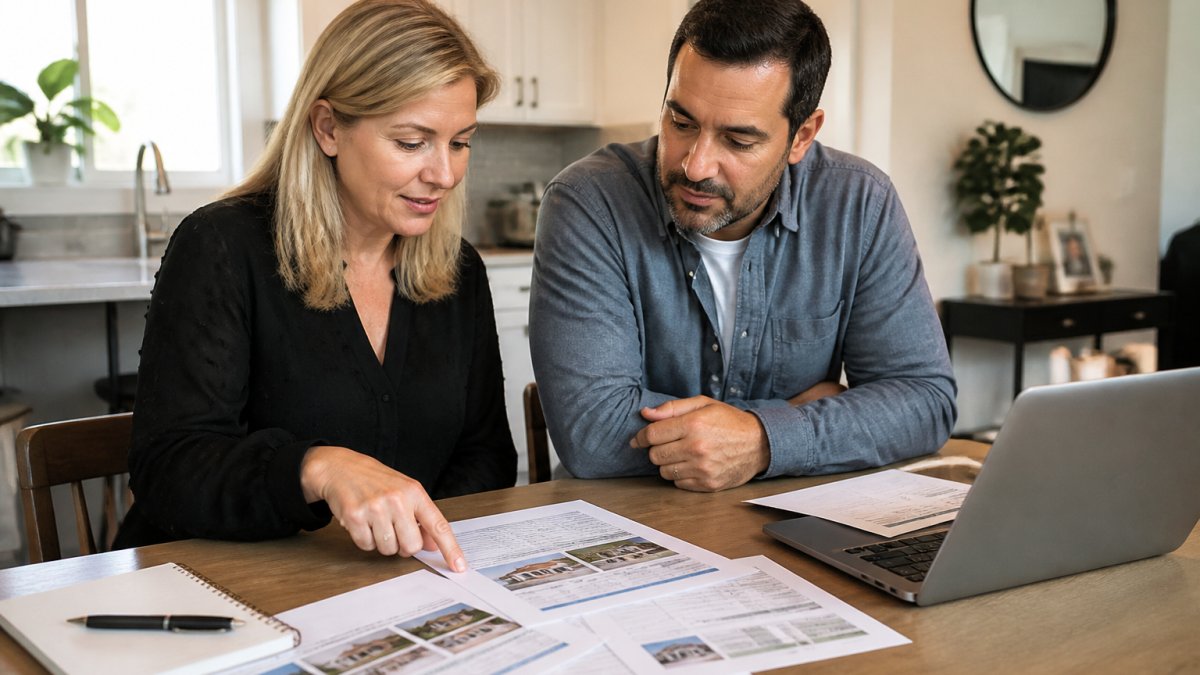
Finding market value means building your own evidence instead of trusting one screen. Start with recent sales, then adjust for what makes your home different.
A Step-by-Step Method to Build a Better Estimate
Here's a process to walk through:
- Pull recent sales. Find three to five similar homes that sold nearby in the last three to six months.
- Check the specs. Compare square footage, bedrooms, bathrooms, and lot size against your own.
- Adjust for differences. Add value for upgrades and features the comps lack. Subtract for what yours lacks.
- Note condition. Be honest. A dated kitchen costs you against a renovated comp.
- Set a range, not a number. A realistic spread beats a false-precision figure.
- Verify your records. Confirm the county has your correct square footage and features.
That last step is the one almost everyone skips.
Correcting your property record is the highest-use fix available. If the county shows the wrong square footage, every automated estimate built on that record is wrong too.
Property record correction checklist:
- Request your property record card from the county assessor
- Confirm square footage, bedroom and bathroom counts
- Check that permitted additions and ADUs are listed
- Verify lot size and any easements
This is also where a live search platform earns its keep. The Jacques Team updates listings every 15 minutes from the official Realtor® database, so the sold data you compare against is current, not months old.
Reading a Valuation Range and What to Do When Estimates Disagree
A valuation range tells you more than any single number. If an estimate comes with a confidence band, read the width first.
When two estimates disagree, don't average them. Investigate instead:
- Check the inputs. Do both use the same square footage and bedroom count?
- Check the comps. Are they using the same recent sales?
- Check the date. Is one working from stale data?
- Check the property type. Unique homes produce wider disagreement.
If the gap stays wide after that, the market is telling you something.
Many homeowners find that a comparative market analysis resolves the gap faster than another automated tool. It puts a human who has seen the house against the data.
Conclusion
The real challenge isn't finding an estimate. It's knowing which numbers you can trust and which ones are describing a house that isn't yours.
Our platform pulls listings every 15 minutes from the official Realtor® database, gives you custom market reports for specific neighborhoods, and lets you save searches with daily alerts on new listings and price changes.
Get started with The Jacques Team and build your next valuation on evidence you can actually check.
Frequently Asked Questions
Why are online home estimates sometimes inaccurate?
Online home estimates rely on public records and sales data, so they miss anything that isn't in a database. They can't see a renovated kitchen, a dated bathroom, a noisy lot line, or deferred maintenance. Accuracy also varies by property type and market, so a single number rarely tells the full story.
How often do online home value estimates update?
Most major platforms refresh home value estimates monthly, and some update more often when new sales data or listing activity hits the market. That schedule means an estimate can lag weeks behind a fast-moving neighborhood. It also means the number can shift without any change to your home, simply because a nearby sale closed. Check the date stamp on any estimate before you rely on it, and compare it against current listing and sold data in your area.
How is an online home estimate different from an appraisal?
An online home estimate is an algorithm's output based on available data. An appraisal is a licensed professional's opinion of value after an in-person inspection, and it's the document lenders rely on for financing. The appraiser measures the home, notes condition and upgrades, and selects comparable sales with adjustments for differences. That inspection step is exactly what automated tools cannot replicate, which is why an online home estimate vs appraisal comparison usually favors the appraisal for accuracy.
How can I get a more accurate estimate of my home's value?
Start by pulling your property record from the county assessor and checking square footage, bedroom and bathroom counts, and lot size for errors. Then gather three to five recent comparable sales within a close radius and adjust for condition, upgrades, and lot differences. Request a comparative market analysis from a local real estate agent, and treat any online home estimate as a starting point rather than a verdict. Combining records, comps, and a professional walkthrough gives you the clearest picture.