 blog
Zillow vs Realtor.com for Home Buyers: Which Wins
Last Updated: November 18, 2026
Quick Summary
The zillow vs realtor.com choice depends on what you need: Zillow leads on valuation tools and agent connections, while Realtor.com leans on its MLS ties and listing freshness. Both pull from MLS feeds, but timing differs by market, so verify any listing directly with the listing agent before you act.
- 58% of buyers in 2026 were repeat buyers, up from 55% in 2025 and 50% in 2023.
- Treat the Zestimate as a starting point and compare it against three recent comparable sales.
- Set alerts for new listings, price changes, and sold data, then review them weekly.
- Browse without submitting forms until you are ready to be contacted, then use one platform at a time.
- The Jacques Team's search platform updates every 15 minutes from the official Realtor database.
Table of Contents
- Zillow vs Realtor.com at a Glance
- Zillow vs. Realtor.com Listings Accuracy and Freshness
- Zillow Zestimate Accuracy for Buyers
- Map Search, Filters, and Saved Alerts Compared
- The Best Home Search Apps for Buyers
- Privacy, Data Collection, and Contact Consent
- Questions to Ask a Real Estate Agent When Buying a Home
- Set Up Your First Search With The Jacques Team
- Frequently Asked Questions
Zillow vs Realtor.com at a Glance
The Zillow vs Realtor.com decision comes down to what you need from a search platform: Zillow leads on valuation tools and agent connections, while Realtor.com leans on its MLS ties and listing freshness.
Buyer behavior is shifting. According to Zillow's Consumer Housing Trends Report, 58% of buyers in 2026 were repeat buyers, up from 55% in 2025 and 50% in 2023. Experienced buyers return to search platforms faster and compare them harder.
Here is the short version:
| Feature | Zillow | Realtor.com |
|---|---|---|
| Strength | Valuation tools, agent network | MLS-sourced listing data |
| Weakness | Estimate variance | Thinner mobile experience |
| Best for | Browsing and estimates | Fresh listing checks |
Below, we break down listing accuracy, Zestimates, map search, and privacy so you can pick a primary platform and verify what you see.
Share of buyers who were repeat buyers
Zillow vs. Realtor.com Listings Accuracy and Freshness
Listing accuracy and freshness separate these two platforms more than any marketing claim.
Where Both Platforms Get Their Data
Both platforms pull from MLS feeds, but timing differs by market. A listing can appear on one site hours before the other. Neither platform guarantees that a listing is still active when you call.
How to Verify a Listing Before You Act
A common mistake is treating a search result as confirmation. It is not. Run this check before you act:
- Confirm the listing status directly with the listing agent
- Cross-check the asking price against recent comparable sales
- Ask when the property last changed status
- Verify square footage against county records
- Confirm whether an open house is still scheduled
What most guides miss is that freshness claims are marketing. The only reliable verification is a direct call or a platform that updates from the official Realtor® database, which is exactly how our listings feed works.
Zillow Zestimate Accuracy for Buyers
Zestimate accuracy varies by market, and buyers should treat it as a starting point, not a verdict. Automated valuations can drift when local inventory moves quickly.
Use estimates this way:
- Pull the Zestimate and note the published range, not the point figure
- Compare against three recent comparable sales
- Ask an agent for a market value opinion before you offer
If you want a valuation without the guesswork, request an instant property valuation and compare it against the automated number.
Map Search, Filters, and Saved Alerts Compared
Map search and saved alerts decide which platform you actually open every morning. Both Zillow and Realtor.com offer map browsing, filters, and saved searches with email alerts, but the buyer-task differences show up in how you draw a search area, how many filters you can stack, and how alerts behave when a listing changes.
A Buyer-Task Test You Can Reproduce
Rather than rely on marketing claims, run the same five tasks on both platforms and note where each one slows you down:
- Draw a custom boundary around a neighborhood and confirm the platform respects it when you pan the map.
- Stack filters for price, beds, baths, square footage, property type, and HOA, then add a keyword like "pool" or "garage."
- Save the search and set alert frequency to daily rather than instant.
- Change one filter and confirm the saved search updates without creating a duplicate.
- Mark a listing as a favorite and check whether price-change and status-change alerts follow it.
Filters That Actually Matter to Buyers
Basic filters (price, beds, baths) are table stakes. The filters that separate a productive search from a frustrating one are:
- Status filters: active, pending, contingent, and coming-soon. Confirm which statuses each platform includes by default, because a search that hides pending listings can make inventory look thinner than it is.
- Sold and price-history filters: useful for comps, but not always available on the same screen as active listings.
- HOA and lot-size filters: critical in markets with planned communities and small lots.
- Keyword search: lets you target "basement," "workshop," or "adu" when the structured fields do not capture what you need.
A common pattern is that buyers set alerts for new listings only, then miss price drops on homes they already favorited. Set alerts for new listings, price changes, and sold data, then review them weekly.
Saved Alerts: Frequency and Fatigue
Saved searches matter most for repeat buyers, who now make up the majority of the market. Instant alerts feel urgent but create fatigue; daily alerts are easier to review in one sitting. On both platforms, you can usually choose the frequency, and you can usually opt out of marketing emails separately from listing alerts. Check that setting before you hand over an email address you actually read.
Watch out: an alert that pushes a listing you saw three days ago is costing you negotiating time, so verify the status on the listing detail page before you schedule a showing.
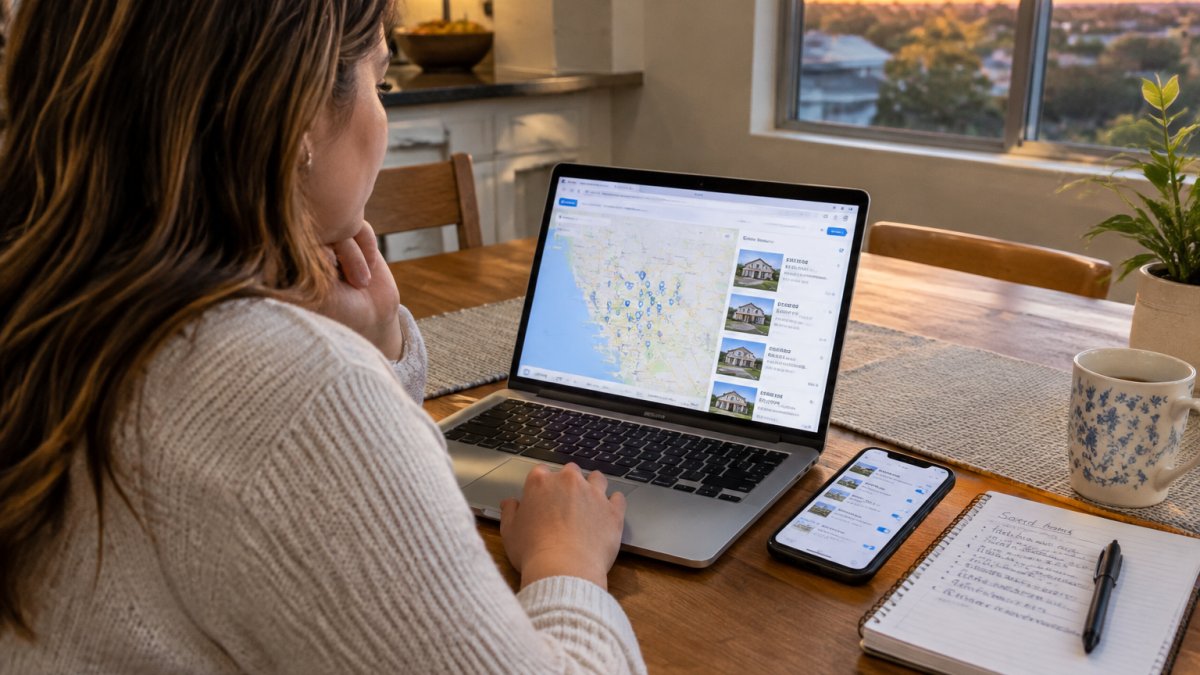
For a walkthrough of boundary drawing and saved-search setup, read how to use interactive maps for home search.
The Best Home Search Apps for Buyers
The best home search app for buyers is the one that loads fast, shows accurate status, and sends alerts you actually read. Zillow and Realtor.com both ship capable apps, but a local MLS-fed platform often wins on freshness.
Mobile experience is where casual browsing happens. Serious buyers still verify on a desktop before scheduling a showing. Watch out: an app that pushes a listing you saw three days ago is costing you negotiating time.
Privacy, Data Collection, and Contact Consent
Privacy and contact consent are the overlooked cost of free search platforms. Connecting with agents through search platforms can mean your contact details move through their lead systems, so it is worth understanding before you type your phone number into a form.
What Happens When You Save a Home
Saving a home is usually low-risk: you create an account, and the platform stores your favorites and search history to power alerts and recommendations. The trade-off is that saved homes and search behavior feed the platform's model of what you are looking for, which can influence which listings and agents it surfaces to you. Read the account settings to see whether you can delete saved searches and favorites, and whether deleting your account removes the associated data.
What Happens When You Request a Tour or Submit a Contact Form
This is where the mechanics differ from what most buyers expect:
A practical approach is to browse without submitting forms until you are ready to be contacted, then submit through one platform at a time so you can track who has your information. If you are not ready to be contacted, browse without submitting forms.
The FTC's guidance on consumer privacy is a useful baseline for what companies should disclose, including how they use your data and how you can limit it. State-level privacy laws may add rights to access or delete your data, so check the privacy policy for the state where you are searching.
Read the consent checkbox before you submit any form that asks for your phone number.
Questions to Ask a Real Estate Agent When Buying a Home
The questions you ask an agent matter more than the platform you found them on. A good agent will tell you when a listing is stale, when a Zestimate is off, and when to walk away.
Questions worth asking before you commit:
- How current is your listing data, and where does it come from?
- Can you show me sold comparables for this property?
- How do you handle multiple-offer situations?
- What do you charge, and who pays it?
- How often will you send me new listings and price changes?
If you are weighing condos, read tips for buying condos in California before your first agent call. The questions overlap, and the answers will tell you fast whether the agent knows the local market.
Set Up Your First Search With The Jacques Team
The platform you choose should make verification easy, not add another layer of doubt. Zillow and Realtor.com are useful starting points, but neither replaces current MLS data and a local agent who knows the inventory.
At The Jacques Team, our search platform updates every 15 minutes from the official Realtor® database. You get interactive map search with custom boundary drawing, custom market reports for specific neighborhoods, and daily email alerts for new listings, price changes, and sold data. Save your searches and track neighborhood activity.
Get started with The Jacques Team and search homes, condos, land, and foreclosures.
Frequently Asked Questions
Is Zillow or Realtor.com better for home buyers?
Neither wins outright. Zillow and Realtor.com each offer map search and saved-search alerts, and their listing data and freshness can differ. Many buyers run both and cross-check any home they plan to tour. For Southern California buyers who want MLS-sourced data refreshed every 15 minutes, a brokerage-backed search platform is the practical third option to compare against.
Are Zillow listings more up to date than Realtor.com listings?
Listing accuracy and status updates can vary across search platforms, and neither should be treated as guaranteed to be current. Before touring, confirm the listing status with a real estate agent or a platform fed directly from the official Realtor database, and treat any single source as a starting point rather than final.
Can you trust Zillow's home value estimates when buying a house?
Treat Zillow Zestimate accuracy as a rough starting range, not an appraisal. Automated valuations generally cannot account for a property's condition, upgrades, or block-level differences. Pair any estimate with comparable sales your agent pulls and a walkthrough of the actual property.
Should I contact the listing agent through a home search app?
You can, but understand what happens next. Contact forms on search platforms can share your details with more than one agent, so check how your information will be used before submitting. If you already work with an agent, ask them to request showings so your representation stays clear. Read the consent language before submitting a form, and use a platform where you control who receives your information.