 How-to
How to Find Off Market Homes Before They Hit the MLS
Last Updated: November 17, 2026
Quick Summary
You can find off market homes for free by driving target neighborhoods weekly, telling everyone you know that you buy without listing, joining local groups and investor meetups, and working public records like county assessor, probate, and code enforcement files. Expired and withdrawn listings are warm leads, since those sellers wanted to sell and did not.
- Off market property means no MLS entry and no public advertising.
- Drive two or three target neighborhoods on the same day each week and log vacant or neglected houses.
- County recorder and assessor sites list owner names, mailing addresses, and transfer dates for free.
- Follow up with a letter on day 1, a postcard on day 8, and one call on day 21.
- Scrub your call list against the Do Not Call Registry before dialing owners.
Table of Contents
- What Off Market Homes Are and Why They Matter
- How to Find Off Market Homes for Free
- Off-Market Properties Websites and Databases
- Off-Market Homes for Sale by Owner
- How to Find Homes That Were Taken Off the Market
- Outreach Scripts, Follow-Up Cadence, and Legal Rules
- Screening, Due Diligence, and Structuring an Offer
- Start Your Off-Market Search with The Jacques Team
- Frequently Asked Questions
What Off Market Homes Are and Why They Matter
Off market homes are properties for sale without public listing on the MLS. The seller trades quietly, often through direct contact or private networks, so the home never appears in a standard search.
Why does this matter? Because less competition changes everything. A listed home draws every buyer with an agent. An off market property may reach only a handful of people. That gap gives you room to negotiate.
Buyers who build quiet seller relationships can find options that never show up in a public feed.
A few core facts to hold onto:
- Off market property means no MLS entry and no public advertising.
- Sellers usually want privacy, speed, or a clean sale without showings.
- Buyers get less competition but must do more legwork.
- Deals move on trust, not on listing traffic.
The trade-off is real. You trade convenience for opportunity. For patient buyers, that trade often pays off.
How to Find Off Market Homes for Free
You can find off market homes for free with three habits: walk neighborhoods, talk to owners, and work your network. None of these cost money. All of them cost time. The difference between a casual stroll and a real pipeline is a repeatable routine, so treat free search like a weekly job rather than a one-time errand.
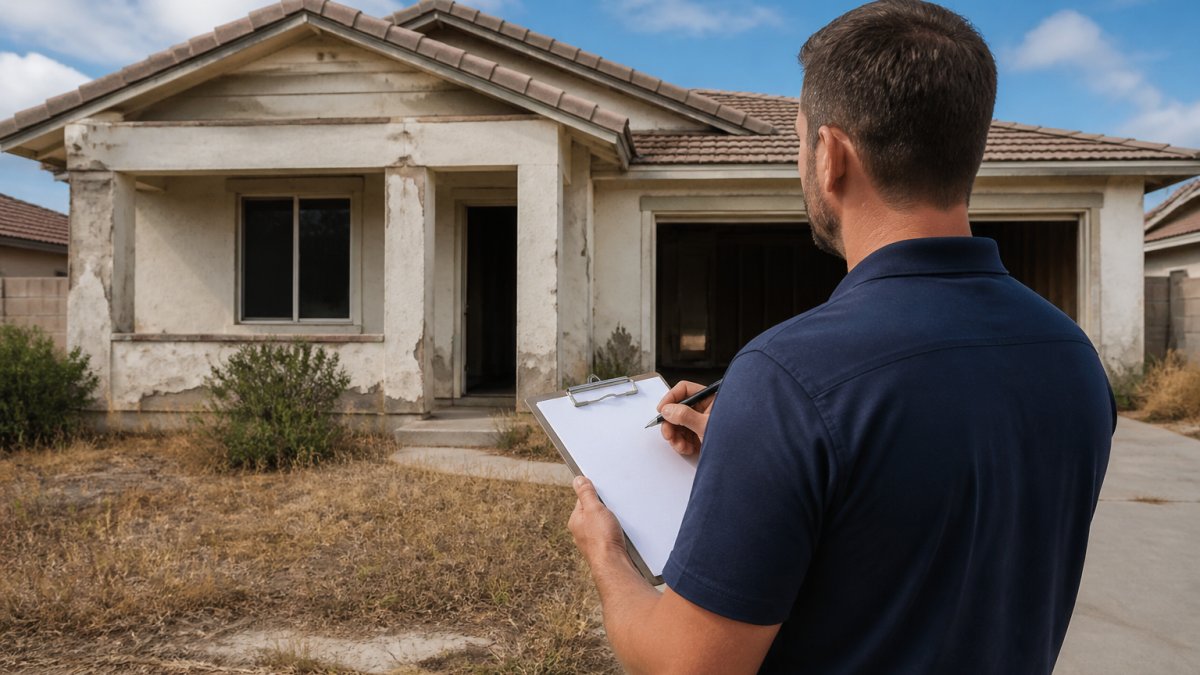
1. Drive for dollars with a route and a log. Pick two or three target neighborhoods within your budget and drive them slowly on the same day each week. Note vacant houses, overgrown yards, boarded windows, stacked mail, and out-of-state mailing addresses on tax records.
2. Tell everyone you know, on purpose. Friends, coworkers, contractors, mail carriers, and local business owners hear about sellers before agents do.
3. Join local groups and attend free events. Community boards, neighborhood apps, church and school networks, and investor meetups surface quiet listings early. At meetups, ask wholesalers what they have under contract and whether they will assign or resell. You do not need to buy anything to learn which streets are turning over.
4. Work the free public-record stack. County recorder and assessor sites list owner names, mailing addresses, transfer dates, and sometimes liens. Probate and divorce filings are public in many counties and often precede a sale. Code enforcement and nuisance-abatement records can flag neglected properties whose owners may be ready to move on.
5. Use free listing-site filters for expired and withdrawn homes. Watch listing sites for homes that vanish, then check county records for status changes. An expired listing is a seller who wanted to sell and did not; that is a warm lead you can approach without paying for a database.

For map-based hunting, interactive maps for home search let you scan blocks and spot patterns on your own.
Watch out: driving for dollars can drift into soliciting owners who have posted no-trespassing or no-soliciting signs, and some neighborhoods have homeowner-association rules against door-to-door outreach. Respect posted signs and verify local rules before you knock.
Off-Market Properties Websites and Databases
An off-market properties website collects listings that never reach the public MLS. Some sites focus on investor inventory. Others track expired and withdrawn listings. Each one works differently, so know what you need before you sign up.
Here is how the main source types compare:
| Source Type | What You Get | Cost | Best For |
|---|---|---|---|
| Public records | Owner names, liens, sale history | Free | Building a seller list |
| Investor platforms | Wholesale and pocket listings | Subscription | Active investors |
| Agent networks | Private pre-listings | Free with an agent | Owner-occupant buyers |
| County foreclosure notices | Pre-foreclosure and auction leads | Free | Distressed property hunters |
Public records are the backbone. County recorder and assessor sites list property owner, mailing address, and transfer history. That data feeds every serious search.
The catch? Public data is messy. You will cross-check names and addresses by hand. Budget time for it.
Off-Market Homes for Sale by Owner
Off market homes for sale by owner come from sellers who want a direct deal. No agent, no listing, no public showings. The owner handles the sale alone or with limited help.
Finding these sellers takes direct outreach. Send a short letter or postcard to owners in your target area. Keep it personal and specific. Mention the street, the property type, and your interest.
Phone outreach works too, but timing matters. Many owners screen calls. A mailed note often lands better than a cold call.
Watch out: some for-sale-by-owner sellers still want full market value. A quiet sale does not always mean a discount. Verify condition and price against recent comparable sales before you commit.
How to Find Homes That Were Taken Off the Market
Homes that were taken off the market often signal a stalled deal. The listing expired, the buyer walked, or the seller changed plans. Each case leaves a trail you can follow.
Start with expired listings. Agents can pull these from the MLS. If you work without an agent, watch listing sites for homes that vanish, then check county records for status changes.
Next, look at pre-foreclosure and bank-owned property. Notices of default are public in most counties. A pre-foreclosure owner may welcome a fast, private sale. Bank-owned property usually returns to the open market, but early contact can still help.
Auction and short sale inventory also fits here. Both carry risk and both reward preparation.
- Expired listing: seller may still want to sell.
- Withdrawn listing: often a privacy or timing issue.
- Pre-foreclosure: motivated seller, tight timeline.
- Short sale: lender approval required, slower close.
Outreach Scripts, Follow-Up Cadence, and Legal Rules
Direct outreach works best with a simple script and steady follow-up. The goal is not to pressure anyone; it is to be the person an owner thinks of when they decide to sell quietly.
Letter template
Hi [Owner Name],
I'm a local buyer interested in [Street Name]. I noticed your property at [Address] and wanted to reach out directly. If you've ever thought about selling without listing it publicly, I'd be glad to talk.
Phone script (first 20 seconds)
Hi, this is [Name]. I'm calling about the property at [Address], I'm a local buyer, not an agent. I know this is out of the blue, so I'll be brief: if you've ever considered a private sale, I'd like to be a resource.
If the owner says no, thank them and ask one question: "Would it be alright if I checked back in a few months in case your plans change?" That single question converts more leads than any scripted pitch.
Text template (only where permitted)
Hi [Owner Name], this is [Name], I sent a letter about [Address]. I'm a local buyer interested in a private sale if you're ever open to it. No pressure; happy to answer questions. Reply STOP to opt out.
Follow-up cadence that works
- Day 1: send the letter.
- Day 8: send a postcard.
- Day 21: make one phone call.
- Day 45: send a final note.
- Then pause for 90 days and restart with a new angle, such as a recent comparable sale on the street.
Keep a simple log of every touch, the date, the channel, and the owner's response. If an owner opts out, record it and do not contact them again through any channel.
Legal rules that apply
The FTC rules on advertising and endorsements and the Do Not Call Registry both apply to outreach. Register your number and scrub your call list against the Registry before dialing; calling a registered number without consent can trigger penalties.
Watch out: a common mistake is buying a lead list and calling it without scrubbing against the Do Not Call Registry or checking state solicitation rules. That can expose you to penalties and poison the relationship before it starts.
Screening, Due Diligence, and Structuring an Offer
Screen every off market lead before you spend money on it. A repeatable checklist saves you from bad deals.
- Confirm the owner on county records.
- Check for liens, judgments, and title issues.
- Pull comparable sales for market value.
- Estimate repair costs from a walk-through.
- Confirm zoning and permitted use.
- Order a title search before closing.
Due diligence follows screening. Inspect the property, review disclosures, and verify utilities and access. Skipping this step is how buyers inherit hidden repair bills.
Before you make an offer, get an instant property valuation to see a data-based estimate. Then structure the offer around condition and risk. A cash offer closes faster but usually prices lower. A financed offer takes longer but may net the seller more. Match the structure to the seller's motivation, not to your preference.
Start Your Off-Market Search with The Jacques Team
Preparation starts with current data. The Jacques Team provides a real estate search platform for homes, condos, land, and foreclosure properties throughout Southern California.
Our platform updates every 15 minutes from the official Realtor® database. You get interactive map search with custom boundary drawing, daily email alerts for new listings and price changes, and custom market reports for any neighborhood.
Get started with The Jacques Team to search current listing data and track the neighborhoods you want.
Off market deals rarely land in your inbox. They come from steady outreach, clean data, and fast decisions. The Jacques Team puts current listings, map tools, and valuation support in one place so you can act with confidence. Get started with The Jacques Team and build a search that reaches beyond the public feed.
Frequently Asked Questions
What is the best way to find off-market properties?
There is no single best channel, but the most effective approach combines two or three methods. Start with a driving-for-dollars sweep of your target neighborhoods to spot vacant and absentee-owned properties, then cross-check county public records for owner names and mailing addresses. Send a direct mail piece or make a cold call, and follow up every two to three weeks. Joining a local investor network or telling a real estate agent your buy box adds referral leads you cannot generate alone. Track every contact in a simple spreadsheet so no follow-up slips.
Can real estate agents see off-market listings?
Agents can see some off-market homes through their MLS, which often has a status for properties marketed privately or excluded from public syndication. That access is not automatic for every pocket listing, and agents cannot share MLS-only data with buyers without the seller's permission. Ask your agent to check the MLS for coming-soon and private-listing statuses, and ask them to reach out directly to listing agents on your behalf. The Jacques Team's platform pulls from the official Realtor database, so you see current listing data as it updates.
Are off-market properties listed on Zillow?
Most off-market homes are not on Zillow or other public portals because the seller has chosen not to syndicate the listing. A few coming-soon listings may appear, but they are a small fraction of the off-market inventory. To see off-market homes, you need direct outreach, investor networks, or an agent who can check MLS private-listing statuses. Relying only on public search portals will leave most of the off-market market invisible to you.
What should I check before making an offer on an off-market home?
Run a title search to uncover liens, easements, and ownership disputes. Order a professional inspection and get contractor bids for any major repairs so your offer reflects real costs. Pull comparable sales from the last six months to estimate market value, and confirm the property's zoning and permitted uses with the local planning department. Ask the seller for a disclosure statement and verify the payoff amount on any existing mortgage. Only after these checks should you structure a cash offer or financed purchase offer with clear contingencies.